
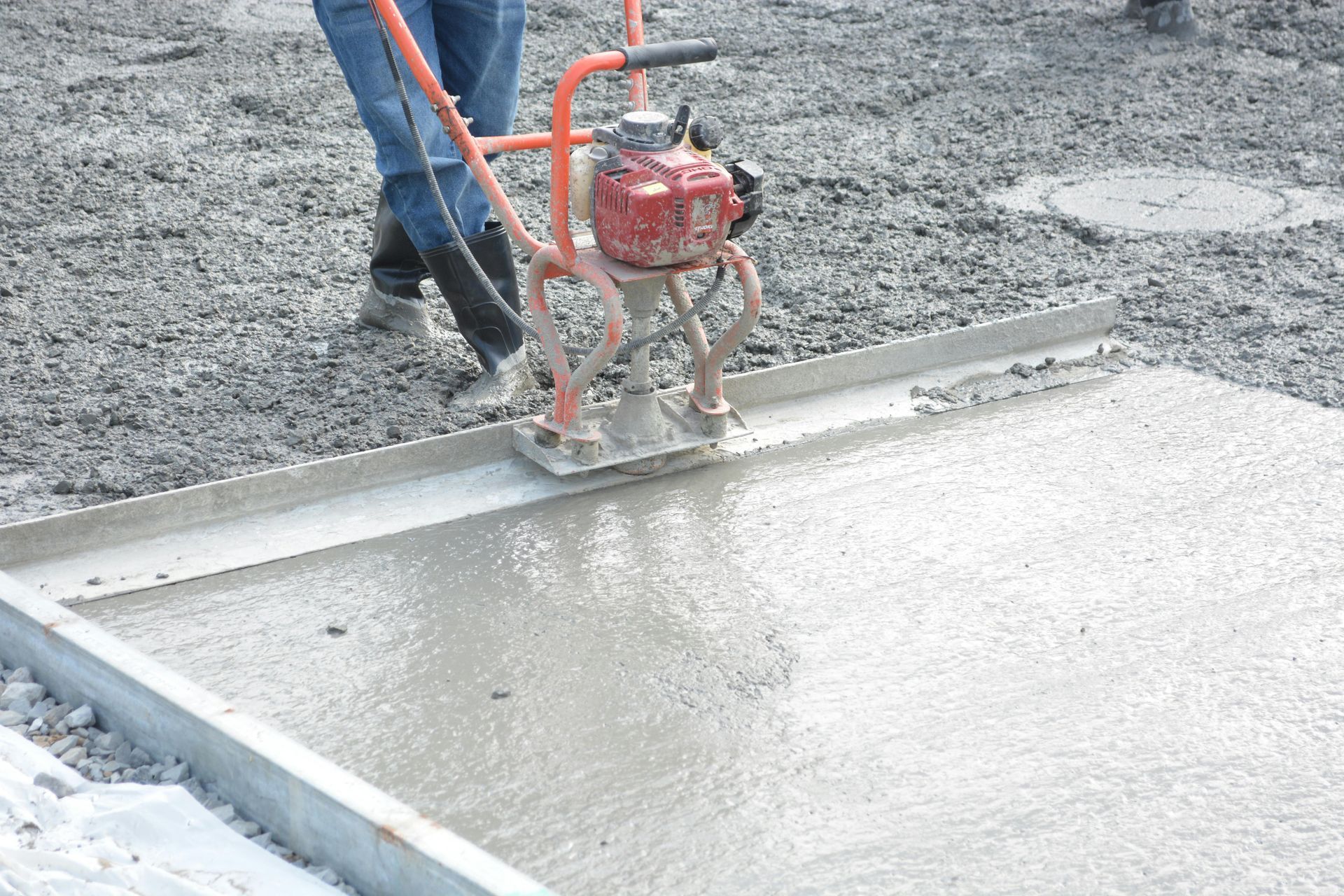
Flat Surfaces Built to Handle Heavy Loads
Concrete Slabs in Hickory for properties requiring durable foundation surfaces and load-bearing support
Commercial Striping pours concrete slabs in Hickory for property owners who need stable, load-bearing surfaces that perform under pressure. Whether you're adding a shop floor, extending a garage, or creating an outdoor workspace, the slab becomes the foundation for everything that happens on top of it. The thickness, reinforcement, and curing process determine whether that surface holds up under years of vehicle traffic, equipment weight, and weather exposure.
Pouring concrete slabs involves site preparation, grading for drainage, compacting the base material, placing reinforcement, and pouring mixed concrete to specifications that match the intended load. Each step affects whether the finished slab remains level, resists cracking under stress, and sheds water properly instead of pooling in low spots.
Schedule a site evaluation to determine base requirements and slab specifications for your property.
What Proper Slab Installation Requires
The base preparation determines long-term performance more than almost any other factor. Your subgrade gets compacted to prevent settling, and crushed stone or gravel provides a stable layer that drains moisture away from the concrete itself. Without proper compaction, even thick concrete will crack as the ground beneath it shifts and settles unevenly over time.
After the slab cures and gains full strength, you notice a surface that remains level across its entire area, supports the weight you place on it without cracking or flexing, and directs water toward edges instead of creating puddles. The concrete resists staining from oil and fluids better when it has cured properly, and the edges stay intact even when vehicles drive over them repeatedly.
Reinforcement options include wire mesh or rebar depending on the expected load, and control joints are cut or formed into the slab to direct cracking into planned locations rather than random fractures. Slabs intended for vehicle traffic typically require greater thickness and stronger base preparation than those used for foot traffic or light storage.
Common Questions About This Service
Property owners in Hickory often ask about site preparation, timing, and what affects long-term durability before starting their project.
What site preparation does a concrete slab require?
Your site needs grading to establish proper drainage slope, removal of organic material that would decompose and create voids, and compaction of the subgrade followed by a layer of crushed aggregate that provides a stable, draining base for the concrete itself.
How does the climate in Hickory affect concrete curing?
Temperature and humidity during the curing period affect how the concrete gains strength, and in hot weather the surface may need to be kept moist for several days to prevent rapid drying that can lead to surface cracking and reduced durability.
What thickness works for vehicle traffic versus foot traffic?
Slabs supporting vehicle weight typically require four to six inches of thickness with reinforcement, while areas used only for foot traffic or storage of lighter items can often use thinner sections depending on soil conditions and expected loads.
When should control joints be added?
Control joints are placed during or shortly after the pour to create planned weak points that guide cracking into straight lines rather than allowing random fractures, and spacing depends on slab thickness and dimensions.
What causes concrete slabs to crack over time?
Cracks develop from inadequate base preparation that allows settling, insufficient reinforcement for the load applied, rapid temperature changes during curing, or natural shrinkage that occurs without proper control joints to manage stress.
Commercial Striping handles the site evaluation, base preparation, and pouring process for properties throughout the Hickory area. Request a detailed estimate to review thickness requirements and reinforcement options based on your intended use.